

Happy June, nature lovers. Ken Hall, aka Bird Nut, here. I guess I should not be so presumptive as to assume that everyone reading this is a nature lover, but I can hope.
Coming off May—the best month, in my opinion, to view the wonders of nature—we slide into June, the month that carries forward all that May gives us. Mountain flowers are in full bloom, spotted fawns on steady legs chase behind their mamas, and for a bird nut such as I, we get to meet the new generation. Literally anywhere you go in June, you will see the fruit of our little bird friends’ labor: fuzzy-topped babies with mouths agape, begging for another bite of food.
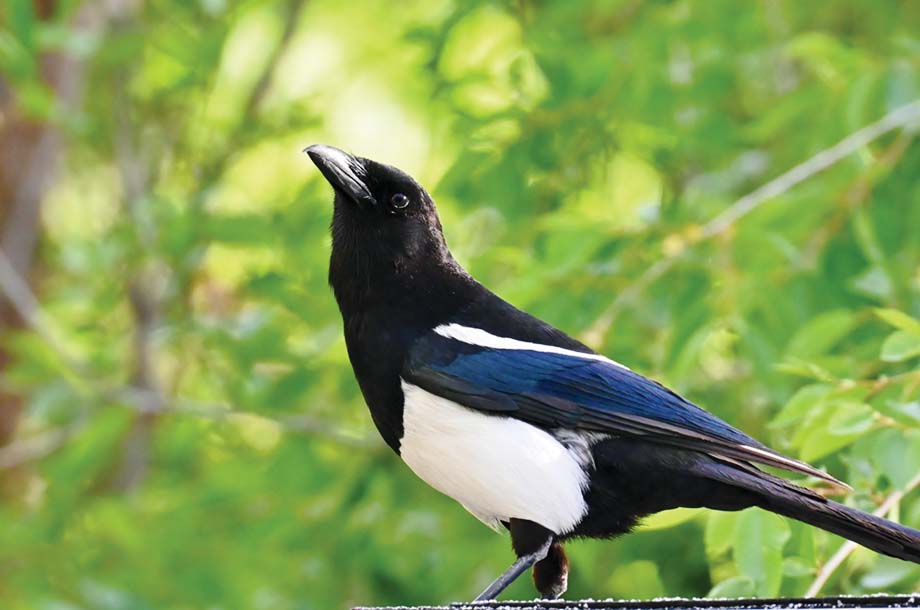
Most birds have dietary preferences for themselves and their young. But the bird I’m going to write about will even eat the broccoli: the black-billed magpie.
Being compulsively curious, I am always looking for the uncommon within the common, so the magpie feeds right into that curiosity. I can stand and watch these incredible birds for hours.
Just recently, I watched one join our little bedded pygmy goats. From my angle, I watched as it spotted a mouse, dispatched it with that strong beak, and then devoured it in about two minutes.
Magpies also hate snakes. Researchers are not entirely sure why. It could be something evolutionary, embedded from years of snakes raiding nests. My sister and I once watched a magpie spot a snake in the tall weeds at the greenbelt and attack it repeatedly. The snake attempted escape, but the magpie would grab it and continue the attack, eventually killing it—surprisingly without eating it. They have even been known to kill rattlesnakes.
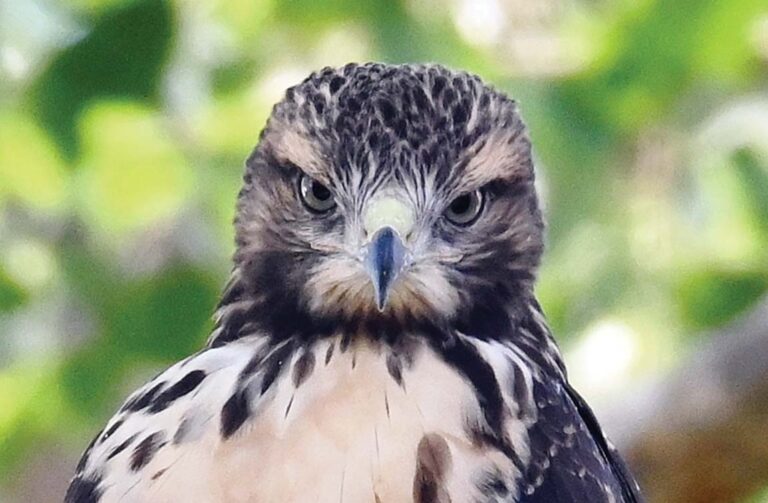
Then, the other day, I witnessed a strange partnership between a red-tailed hawk and a pair of magpies. The hawk caught a young cottontail rabbit and dropped the now-deceased bunny in the street. (Our street is a dead end with very little traffic.) The entire sequence was watched by both a pair of magpies and myself.
The hawk flew into a nearby dead tree while the birds moved in. Rabbits this time of year are often loaded with fleas. When their lives end, the fleas vacate, looking for a new host. I believe the red-tail was avoiding the flea exodus. The magpies apparently did not care. They proceeded to do what magpies do until the hawk decided they had done enough work.
The hawk returned to claim its young ones’ meal but left a large piece for the magpies to feed their own young. A strange business agreement.
Digging deeper, I found some fascinating facts about these birds. In the wild, they live an average of four to six years. They mate for life and defend their mates and young with the ferocity of a Doberman, unafraid to take on one of us two-legged creatures if they feel threatened.
Some cultures believe they are symbols of good fortune, while others believe the opposite. Native American hunter-gatherer tribes considered the magpie a good omen. A group of magpies is most commonly called a parliament, though they may also be referred to as a gulp, mischief, tribe, charm, or congregation.
Magpies can recognize themselves in a mirror, an ability seen only in humans, apes, elephants, and dolphins. Self-awareness is considered an indicator of a highly evolved brain. Much like their cousins—the crow and raven—they are considered among the most intelligent animals on Earth.
They have photographic memories for human faces and can hold grudges against people who have threatened them, even warning extended family members and offspring about those individuals. But they also remember kindness—a treat, a water dish—and can become your friend.
They are master mimics, capable of much more than their loud squawks. They can imitate the songs of dozens of other birds and, if raised near humans, can actually learn to talk. Keep in mind that their loud squawks are simply their way of communicating, not a deliberate attempt to irritate human ears.
So the next time you see one of these beautiful black-and-white birds, take a few moments to really watch them. Notice how their black feathers shift to shades of blue and green in the sun’s reflection. They truly are fascinating birds.
Follow me or message me on Facebook at Birds of Colorado or Bird Friends of Colorado.
Hope to see you on the trail. God bless.