

Margie Seyfer started a new hobby during retirement. Now her garden is a beloved fixture in the community.
Seyfer opens her garden for local tours and parties for organizations like the Wheat Ridge Business Association, the Lakewood Kiwanis garden tour and the Wheat Ridge Garden Tour. Welcoming as many as 100 attendees, proceeds from the tours go toward local charitable causes.
“I just feel a garden is to be shared,” Seyfer said. “There’s so much beauty. It shouldn’t just be limited to me.”
Seyfer lives on a semi-busy street in Wheat Ridge. It’s not uncommon for people driving by her garden to stop and compliment it. One neighbor even told Seyfer before she moved that one of the things she would miss most about living in the neighborhood was driving by her yard every day.
“People love beauty,” Seyfer said. “I mean, look at Denver Botanic Gardens. People buy memberships to walk through there. It’s just green stuff. It’s just plants.”
A Wheat Ridge resident of 55 years, Seyfer didn’t spend much time in nature until she had more free time during retirement. She had never gardened before until a dead pine tree changed her course.
The pine tree left behind a large space that she didn’t want to fill with more grass. It was late fall when she visited a garden store and bought ten plants, placing them in the mud where the old tree once stood.
“Lo and behold, they all returned the following spring,” Seyfer said. “That’s what piqued my interest.”
She considered it a miracle. At the time, she didn’t even know the names of the plants she put in the ground.
“It’s so exciting to see something that you plant come back,” Seyfer said. “It’s just amazing. It’s definitely psychologically addictive. I’m a good example of being addicted.”
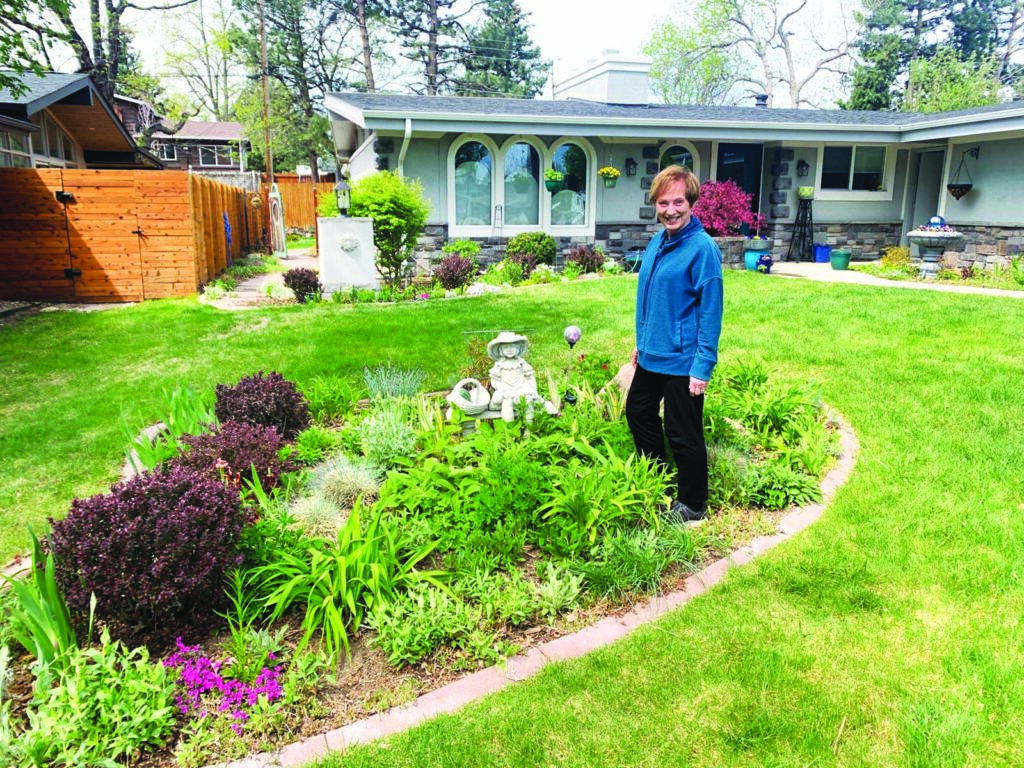
Later, Seyfer and her husband reconfigured their driveway in 2000, which left room for a large flower bed in their front yard. She hired a landscaper at first to plant flowers.
“You can only afford to have so much installed by other people,” Seyfer said. “Then you have to get your hands in the dirt.”
Seyfer began researching online and joined a local garden club, where she’s now been a member for 23 years. Meeting monthly, the group bonds over their shared love of gardening. They attend talks from instructors and experts and visit other garden clubs.
“It is a well-oiled machine,” Seyfer said.
She notices younger members of her gardening club becoming more interested in vegetable gardening. For many, it serves as a gateway to planting flowers. Seyfer sees a “big resurgence in growing your own food and taking care of Mother Earth,” she said.
Seyfer has about 1,000 plants in her yard. About one-fourth are annuals and three-fourths are perennials. Half of those plants are divisions from existing plants in her garden. She especially loves when her 80 daylilies are in bloom and enjoys pointing out underrated plants like her Lenten Roses.
“I’m sure some of them go back to 2000 and just have been divided and divided,” Seyfer said.
With the warmer winters Colorado has been experiencing, Seyfer sometimes feels like she’s gardening in a place like California. She enjoys the longer bloom seasons, although the dry climate remains the same.
“Plants really do like humidity,” Seyfer said. “Sorry, plants.”
She feels her garden is about a month ahead compared to years past.
“It’ll be interesting,” Seyfer said. “I’ve never had plants this tall survive these freezes. I’ve never had this long of a bloom season. It’ll be interesting to see if the three-week bloomers put out more branches. More divisions.”
Seyfer is closely watching the county’s water restrictions. Now in Stage One, gardeners must follow irrigation schedules. She stays in contact with Consolidated Mutual, which provides updates on watering rules. Currently, gardeners can water two days a week, while containers and flower beds can be hand-watered.
She is concerned the county may move to Stage Two restrictions.
“I’m worried that you will put garden centers out of business if we’re not allowed to water containers,” Seyfer said.
Seyfer admits she’s a bit of a gambler, and an optimist, when it comes to her plants. This season, she took a risk and planted annuals into hanging baskets before leaving for a trip to France with members of her gardening club, knowing there could be an upcoming freeze. She gambled that the weather reports would be wrong.
“Usually they miss,” Seyfer said.
As for wildlife that visits her garden, Seyfer has developed a close relationship with a returning pair of crows. The birds don’t allow other birds to use her birdbath or visit the yard, possibly because she feeds them chickens and unsalted peanuts in the shell. Seyfer is fascinated by their intelligence.
“Do you know they have funerals for their fallen family?” Seyfer said. “Incredible.”
To beginner gardeners, Seyfer’s yard may look like a lot of work. Many ask how much time she spends maintaining it.
“I am really busy from mid-March to the end of April,” Seyfer said. “That is basically doing the grunt work nobody wants to do—clearing the beds. Not of plants, but debris and cutting back dead stuff.”
From Memorial Day weekend until early June, it’s busy again with planting annuals.
“Then all it is is glory,” Seyfer said. “Pure joy. You just walk through and watch them.”
A lush garden takes years to build. Seyfer’s has been 25 years in the making. Although gardening requires early mornings and hours of work outside, she says it’s worth it.
“You know you’re a true gardener when you’re in your backyard checking out your babies at 6 or 6:30 in the morning,” Seyfer said. “At the light of day, you’re out there walking around seeing how they are doing. They’re like your children. There’s just a thousand of them.”
Margie’s Gardening Tips
• Geraniums, especially white geraniums, attract Japanese beetles, which die on their leaves.
• Gardening a plot at a community garden is a good way to get started.
• Amend naturally clay-rich soil with compost brands like Eco.
• Plants from brands like Proven Winners tend to grow better in this climate and are sold at major garden centers.
• Although Colorado’s growing zone has shifted from Zone 5 to Zone 6, Seyfer and members of her garden club still plant mostly Zone 4 and 5 plants.
• Use plant scraps as mulch.
• She recommends froghead sprinklers, which deliver water close to the ground.