

This September marks 122 years since the Town of Mountain View was officially incorporated in 1904. Before its incorporation, John Brisben Walker purchased what was then known as Berkeley Farm in 1878. Less than a decade later, the Berkeley Annex subdivision was platted, laying the foundation for the neighborhood that would eventually become the Town of Mountain View.
When residents in 1904 voted to incorporate, they chose to preserve local control over their community just 28 years after Colorado became a state. Our twelve block community has remained independent through more than a century of growth and change across the Denver Metro Area. We owe this to the commitment of generations of volunteers, elected officials, employees, and neighbors to preserve and improve the town.
Life has changed drastically since the beginning of the 20th century. In 1904, Theodore Roosevelt was president, only around 10% of people had a telephone or a bathtub, city speed limits were typically 10 miles per hour, and the average life expectancy was 47 years.
Mountain View’s earliest records offer a glimpse of what life was like 122 years ago. At Town Hall, we have the original handwritten meeting minutes, ordinances, and resolutions from the town’s earliest meetings. A 1905 Town council member told the quorum that “if we have a Town Hall, the telephone company will put a phone in free of charge” and provide free calls for town officers to use for public purposes. The Town has gone from the transformative technological advance of a telephone for Town Hall to now almost 100% of the nation having access to instantaneous communication. As we started to live longer, drive faster, and connect more easily through technology, how has Mountain View changed and what can we learn from it?
Some of the earliest discussions recorded by the newly incorporated Town would sound familiar to anyone involved in local government today. In January 1905, the mayor proposed establishing standing committees to “look after the public affairs” and “streets and alleys.” Maintaining public infrastructure and determining how best to serve residents remain fundamental responsibilities of local government. Similar to the policies of today, an ordinance from December 1904 declared that “no person shall carry on the business or occupation of peddler or hawker within the Town of Mountain View… without having first obtained a license”. The proportion of people who would identify with the occupation of peddler or hawker have, no doubt, decreased significantly, but the ordinance shows how the community prioritized a properly regulated local economy.
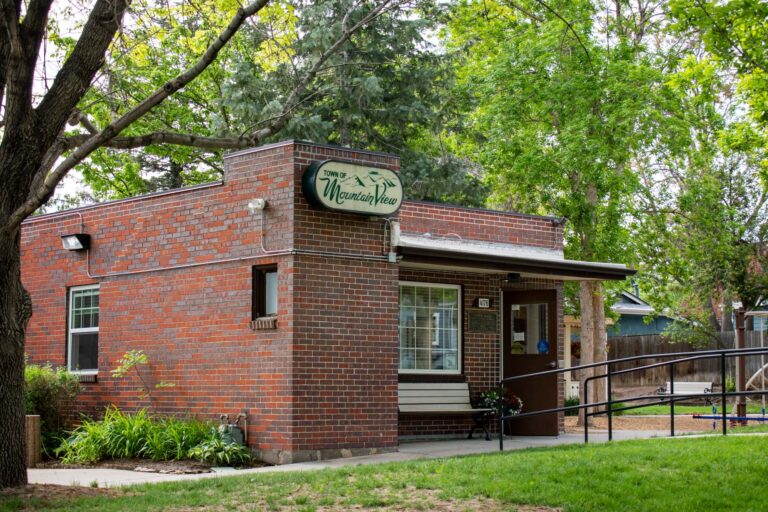
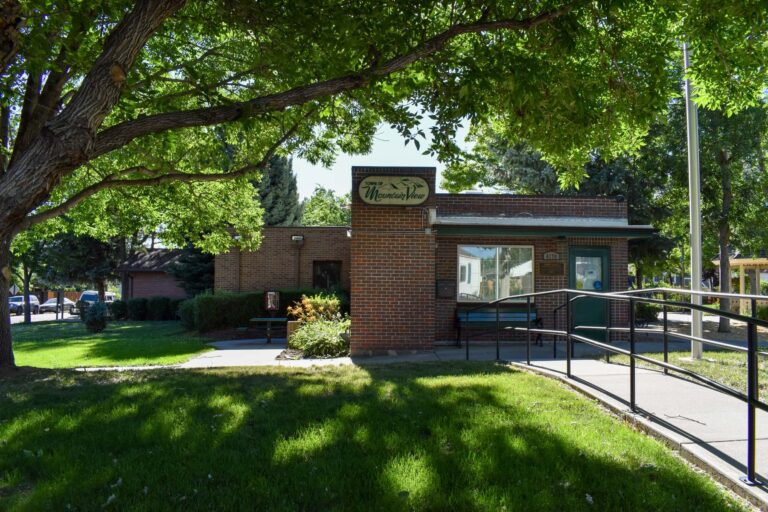
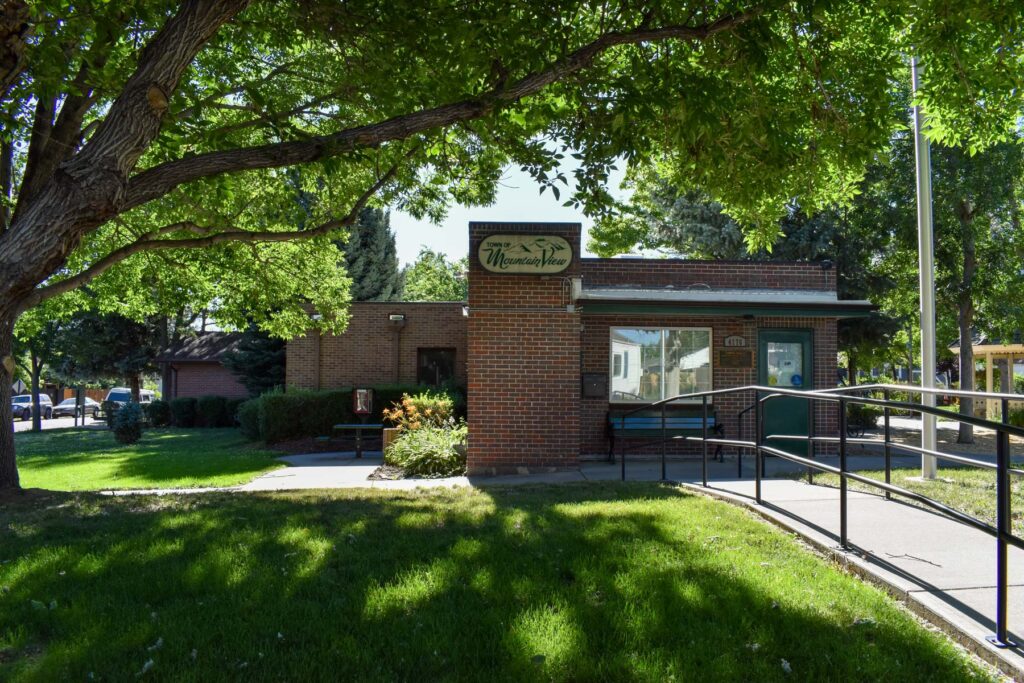
Municipal governments continually face decisions about when to invest, when to wait, which improvements should take priority, and how to responsibly use limited public resources. The first Town Council heard a report on the estimated cost of building a 22×36 sq ft brick Town Hall. Our current town hall still sits in the same lot, with a few renovations and expansions. The preliminary estimate was $361 – around $13,500 adjusted for inflation. The projects have changed, but the questions surrounding them have not.
Many of the values that inspired the incorporation of our town remain unchanged. Compassion, collaboration, and thoughtful planning have always been at the heart of Mountain View’s success. Our legacy of community involvement continues to play an important role in shaping the town’s future. The Town’s 1973 decision to become a home rule municipality continued that traditioBy further securing local authority over matters affecting the community.
The records of Mountain View’s earliest government also demonstrate the importance of balancing immediate concerns with long-term planning. When faced with the expense of constructing Town Hall, the mayor said, “nothing could be gained by being hasty and it might be advantageous to be dilatory”. There is still wisdom in avoiding hasty decisions, but thoughtful government must also anticipate future needs rather than simply respond to immediate challenges. The next 122 years will undoubtedly bring changes that Mountain View’s earliest residents could no more have imagined than they could have imagined a cellphone. New technologies, including artificial intelligence, will continue changing how municipalities operate and how residents interact with their local governments. Infrastructure will need to adapt, and new challenges will require solutions that may not yet exist. Technology can connect us across the globe in seconds, but our streets, neighborhoods, public spaces, local regulations, and relationships with our neighbors remain firmly rooted in the communities where we live.
In an increasingly connected world, local government remains essential precisely because so many of the decisions that shape our everyday lives remain local. Preserving institutional knowledge through continuity among Town employees, elected officials, and engaged residents allows us to learn from previous decisions, understand how Mountain View became the community it is today, and make more informed choices about what it should become tomorrow. The handwritten records preserved at Town Hall remind us that the decisions made in council meetings, offices, and conversations between neighbors can shape a community long after the people who made them are gone. Mountain View has endured for 122 years because generations of residents have chosen to invest in this small community and in one another. By preserving that history while continuing to plan thoughtfully for what comes next, today’s residents can help ensure that Mountain View remains a strong, independent, and resilient community for generations to come.