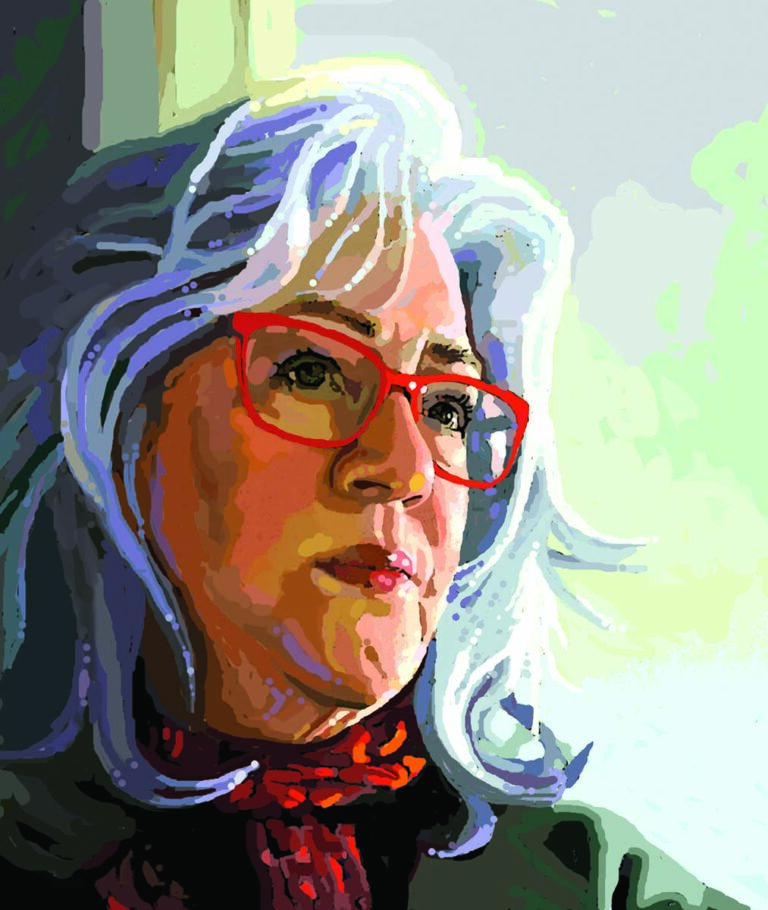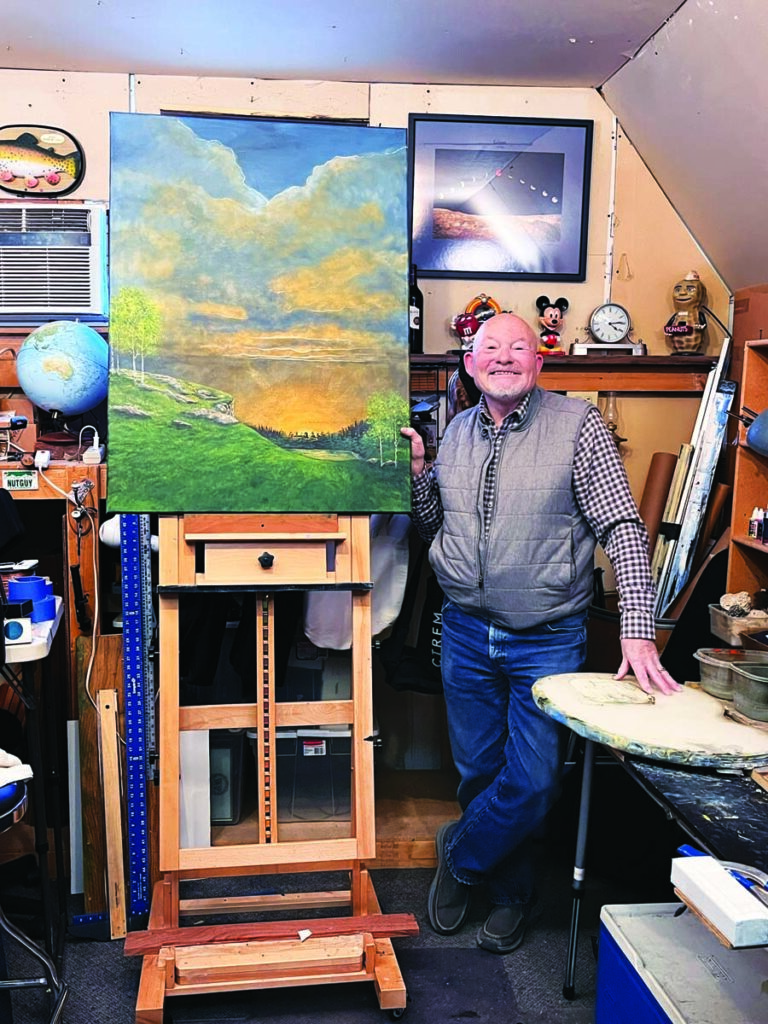


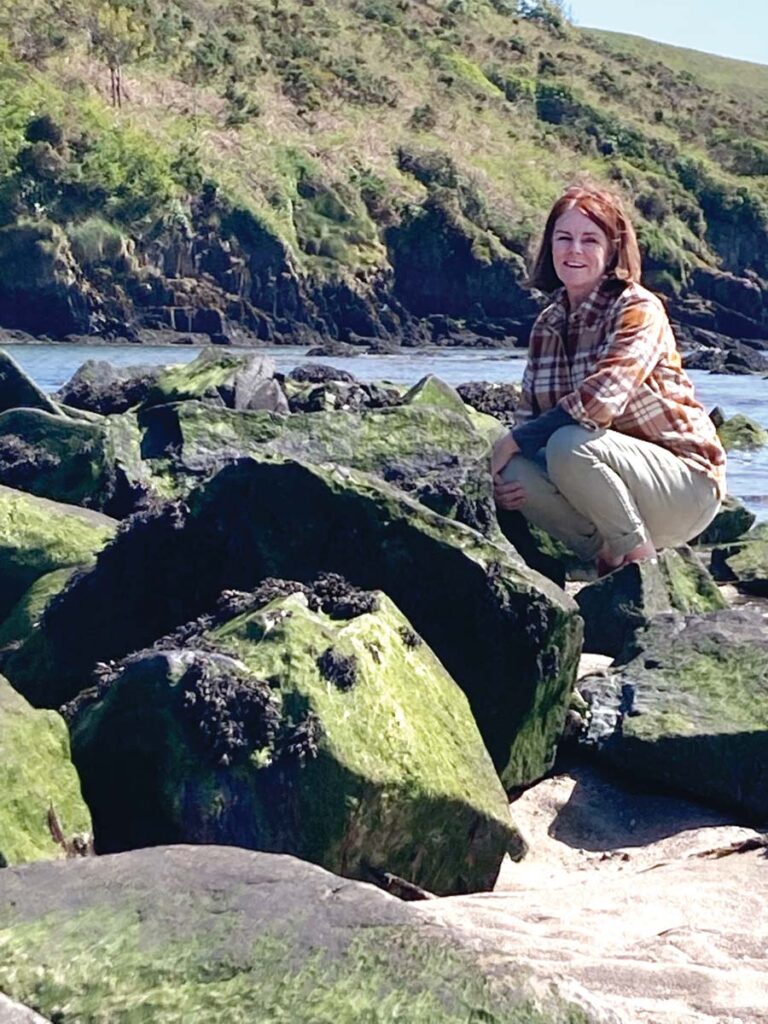
Carolyn is a local artist who works in oil and cold wax — a demanding and tactile medium. She describes her process as a meditation.
She began her life in Montana. Her father was Blackfeet Indian, and her mother was white. She and her four siblings lived near the reservation and in low income housing, surrounded by their grandmother and aunts and cousins. Sadly, when Carolyn was four years old, that family structure disintegrated.
All five children were placed in foster care and separated. Carolyn and her two older sisters went to live in the suburbs with a middle-class family, while her younger brother and sister moved to the mountains with another.
Although she doesn’t remember much about that transition, she often imagines it must have felt like waking up on another planet — with everything familiar suddenly gone.
Carolyn says she was fortunate that they remained close to their grandmother and father, traveling often from the Denver area back to Montana to spend summers and school breaks with them.
When did you first know you were creative?
Carolyn, a lifelong artist, was known as “the artist in the family.” Her parents encouraged her creativity from an early age.
Her Process
She describes painting as “a journey with an unknown ending.” For her, the act of painting is a solitary and inward process — quiet, meditative, and ultimately an offering to the sacred.
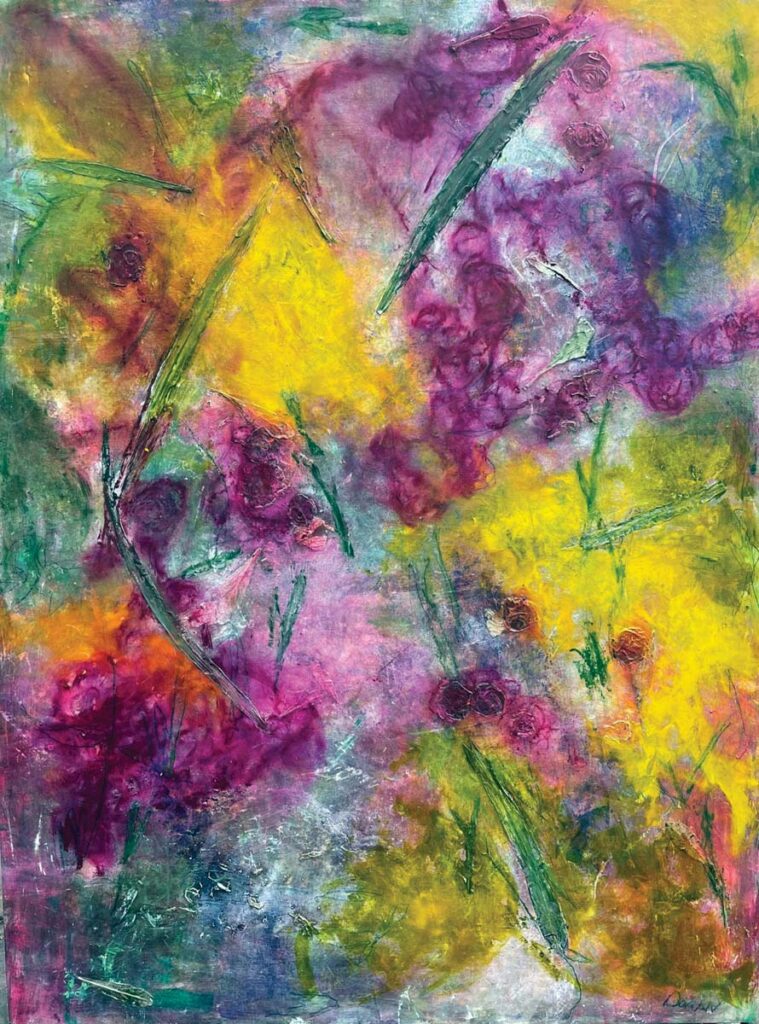
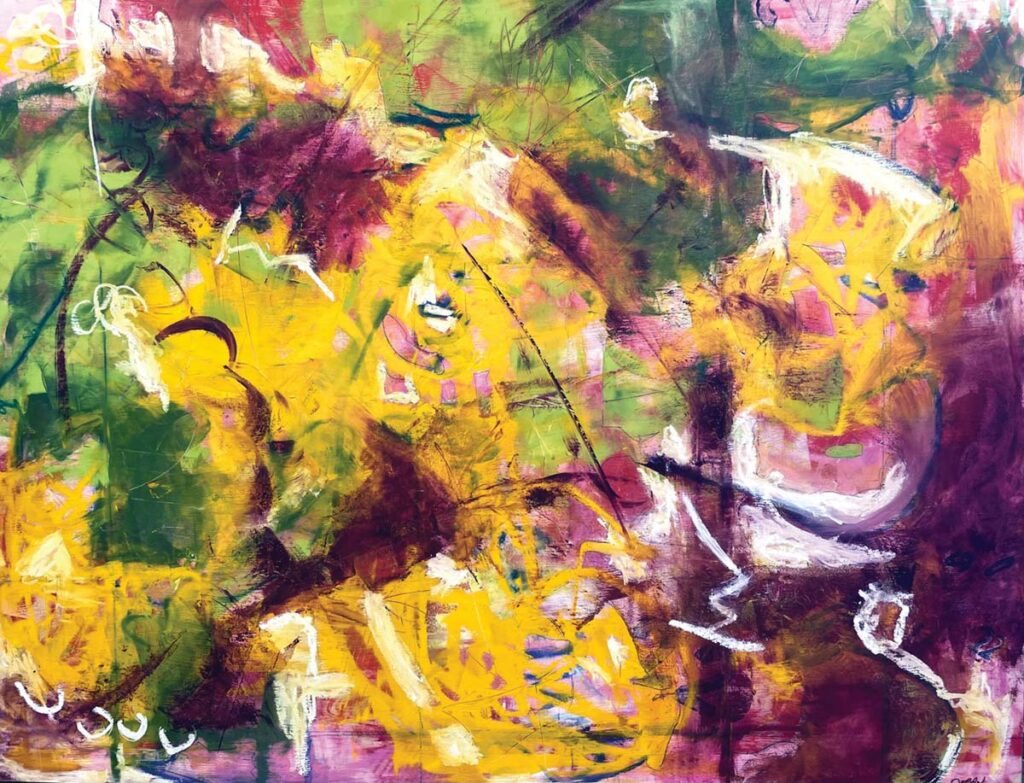
Carolyn begins by laying down multiple layers of contrasting color, mixing oil paint with cold wax to build body and depth. She adds and subtracts — layering more paint or scratching, gouging, or scraping away to reveal what lies beneath.
She incorporates marks, textures, colors, and lines to tell each painting’s particular story. The mark-making, she says, “could be inspired by a satellite image, a poetic phrase, or it could be angry slashes or soft lines.”
At times, she works by “reducing — excavating to show what lies beneath — or adding to create topography.”
Unique to her work is the inclusion of physical materials: bones, hair, dirt, leaves, letters, or bits of insects. “Sometimes my work feels like an animal hide — soft and worn — showing the beauty of the scar,” she says.
What inspires or influences your work?
Life experiences, people, and landscapes deeply influence Carolyn’s art. Inspiration might begin with a phrase, a place, a memory, or a feeling. She finds it in poetry, nature, music, or a fleeting recollection.
She is especially influenced by her grandmother, her origins, her Blackfeet heritage, and what she calls her “blended identity.”
More recently, Carolyn’s work has been shaped by the devastating loss of her son. While her art reflects that grief, she has been surprised to find that her color palette has become vibrant rather than dark. In her piece Laughter From My Startled Mouth, for instance, bright yellows, reds, and greens dominate the canvas.
Her life experiences — both joyful and painful — continue to inform and inspire her work.
What challenges have you experienced in making art or with creative blocks?
Carolyn reflects that raising children and building a career often took precedence in her life as a woman. Time was always scarce, and she often found herself trying to please others — struggling with the difficulty of putting herself first.
One of her proudest accomplishments was returning to school in her 40s to pursue her lifelong dream of attending art school. Finding her voice as an artist and being accepted into the CORE Art Space Gallery have been, she says, profound affirmations of her work.
When asked how art feeds her soul, Carolyn’s first response was simple: “It just does.” She explains that art is so much a part of her that when she’s away from the studio too long, she feels a pull — a nudge — to return.
What do you see yourself doing creatively in the future?
While Carolyn loves working with oil and cold wax, she is also passionate about printmaking. She is currently foraging organic plants and minerals to create handmade inks and pigments.
In her refrigerator, she keeps a small stash of materials — rabbitbrush for a yellow hue and copper tubing with vinegar for a beautiful blue. She would like to one day teach others how to make their own natural inks and pigments, as well as how to work with cold wax.
What encouragement would you give to other artists?
Carolyn believes that everyone is creative — and that creativity itself is a reflection of the divine. She reminds us that creativity is fragile, urging kindness and tenderness, and encouraging others not to crush enthusiasm — in themselves or in others.
She also shares her theory on art or learning anything new: to become better than 80% of others working in the same medium, one must study it for at least two years — and, most importantly, become comfortable with being a beginner.
Last Words
“My work is my visual language that represents my history. I offer it to the viewer to have their own experience. What will you represent?”
To see Carolyn’s work in person, she will have some pieces in the Core Art Space Holiday Show until December 21st.