

Before sunrise, while most of Jefferson County is still asleep, local farmers are already deep into their workday. Headlamps move through fields as tomatoes are harvested by hand, crates of greens are stacked into trucks and coolers are checked before the drive into town. Hours later, customers arrive at a farmers market to tables lined with onions, carrots, herbs, flowers, eggs and more. The stand can appear effortless, but behind every basket of produce is a farmer balancing Colorado weather, rising costs, exhaustion, and uncertainty, all to feed our community.
The reality of local food production is far more demanding than many people realize. Farming requires physical labor, technical skill, financial risk and constant adaptability. During the growing season, farmers work seven days a week while navigating drought, hailstorms, water scarcity, labor shortages, increasingly expensive land and equipment and the rising cost of fuel and supplies. After food is harvested, the work continues. Getting produce to market requires washing, cooling, packing, transportation, permits, market fees and food safety compliance, all while managing the daily demands of the farm itself.
Yet farmers continue because the work is deeply rooted in purpose, community and stewardship of the land.
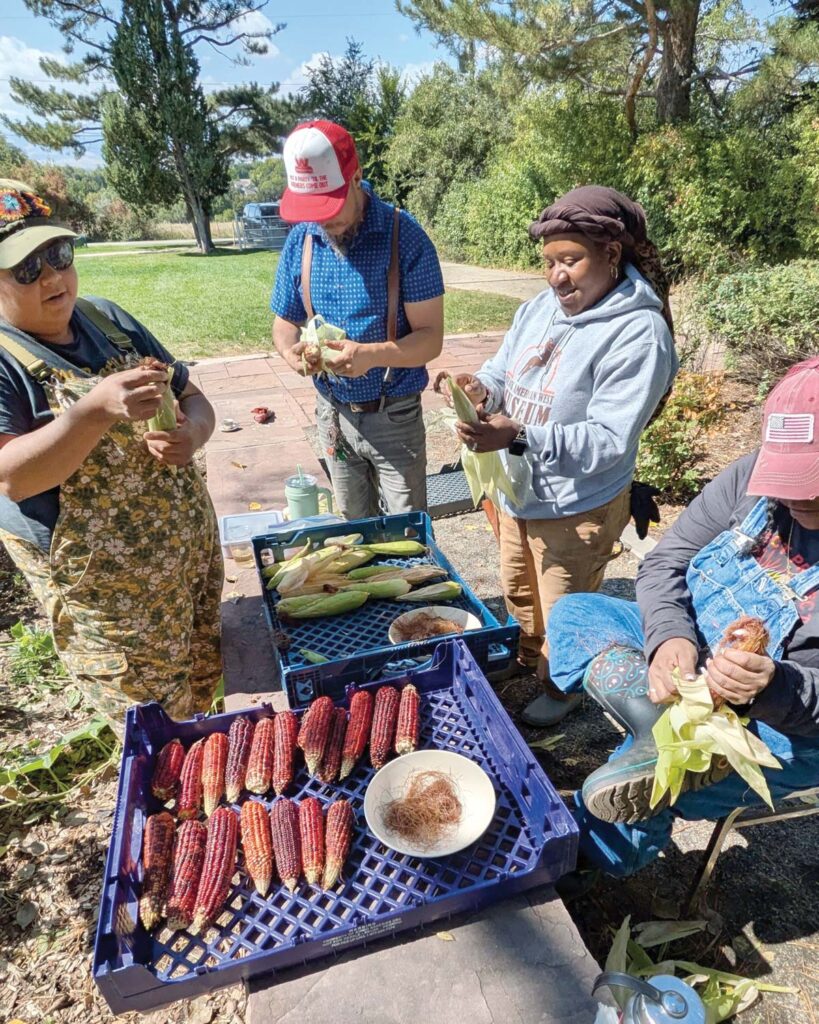
At FrontLine Farming’s Majestic View Farm in Arvada, Fatuma Emmad describes food as “never just food–it’s dignity, memory, survival and power.” Originally from Ethiopia and Yemen, she sees many Colorado communities, especially Black, Indigenous, immigrant, working-class and communities of color, experiencing their own forms of disconnection from land, healthy food and economic stability. For Fatuma and many other local growers, farming is not only about producing food. It is also about preserving cultural knowledge, caring for the land and building a food system where communities historically excluded from land ownership and agricultural leadership can grow culturally meaningful food and feed neighbors with dignity.
Long before Jefferson County was established, Indigenous communities stewarded this land through deep agricultural knowledge, ecological management and relationships with the environment that sustained communities for generations. That legacy of stewardship continues to shape conversations today about land, food, resilience and belonging.
Jefferson County is home to roughly 65 local farms, far more than many residents realize. These farms are small businesses, employers, educators and economic drivers woven into the fabric of the local economy. When residents buy directly from farmers, more food dollars stay circulating within the community, supporting local jobs, local land stewardship and local businesses rather than leaving the region through distant supply chains. Meeting your farmer at one of the many Denver area farmers markets, a farm stand, or a Community Supported Agriculture (CSA) pickup creates relationships that industrial food systems often erase.
For many small farms, farmers markets and direct sales are essential to survival in a food system dominated by industrial agriculture operating at a massive scale. Customers benefit too, gaining access to fresher, more flavorful food harvested closer to peak ripeness and often with greater nutritional value. Farmers can share how food is grown, pass down cultural traditions and reconnect people to the land around them.
Local producers also play an important role in addressing food insecurity across Jefferson County and the Denver metro area. Farmers and food access organizations increasingly partner together to ensure fresh, locally grown food reaches families experiencing barriers to access. Markets that accept SNAP and WIC benefits help make healthy food more affordable while also supporting the farmers who grow it. During disruptions such as pandemics, supply chain failures, or interruptions to federal nutrition programs, local producers help strengthen community resilience by keeping food production closer to home.
For farmers of color especially, farmers markets and direct sales spaces create visibility in a food system where communities of color have long provided essential agricultural labor while too rarely being recognized as farmers and land stewards themselves. Supporting local agriculture helps create a more equitable and resilient food system for future generations.
Too often, conversations about agriculture focus only on distant rural production while overlooking the farmers growing food right next door across Jefferson County and the Denver metro area. But local agriculture is deeply connected to public health, economic resilience, environmental stewardship and community well-being.
Supporting local farmers is not just about buying fresh food. It is an investment in healthy land, strong local economies, food security and the relationships that sustain a resilient community food system. The future of local food depends on whether we choose to support the people growing it.