

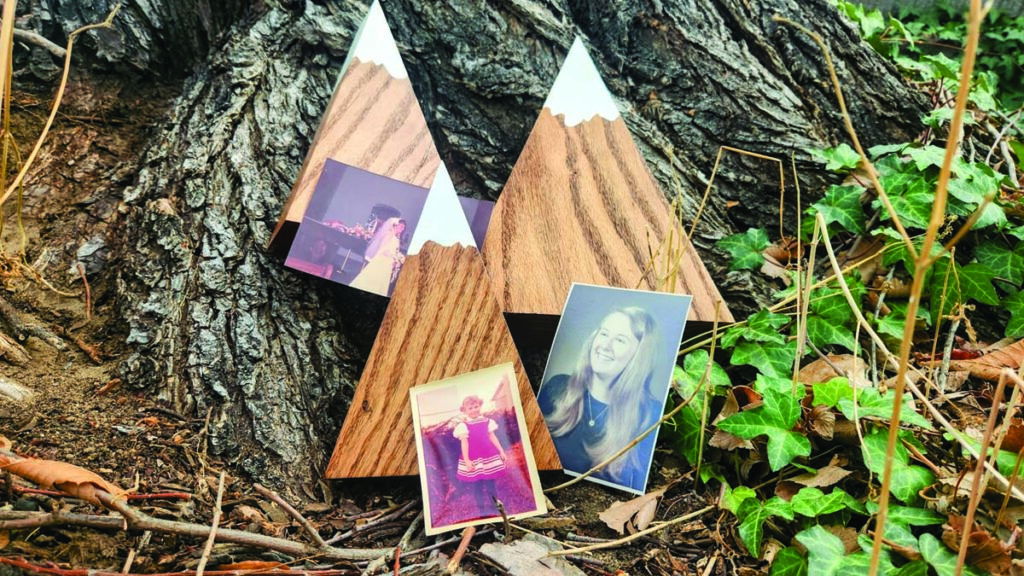
Some time ago, my mother-in-law, Susan, found herself scrolling the online everything store in search of home décor. She landed on a set of wooden triangles painted to resemble snow-capped mountains. “Eighty bucks,” she said flatly. “It’s a few hunks of wood and some paint.” She promptly commissioned her woodworking son-in-law to replicate the product—at a discount, free labor. It’s a dilemma many face: do we pay a premium for convenient low quality, or do we seek value at a higher cost? Susan saw that price as a cash grab for inferior goods.
Recently, I’ve had the privilege of profiling local businesses that offer alternatives to conglomerates. Gino’s Belfiore Italian is Wheat Ridge’s answer to authentic Italian cuisine without mass production; Tadd’s Stylus and Crate offers a personal touch Starbucks cannot replicate; and Brien and Ali, the married team behind Altitude Animal Aid, replace the chaos and cost of traditional clinics with compassionate in-home veterinary care. These locally owned ventures prove that businesses can defy the gravitational pull of our modern economy.
The long-dead economist Milton Friedman famously said that companies’ only real responsibility is to maximize profits. Online juggernauts like Walmart, Amazon, and Alibaba have perfected this model: extreme efficiencies at the lowest price possible. Choosing a small, independently owned business generally means higher prices but this is the price we pay to keep Main Street alive. When we spend locally, our dollars don’t disappear into distant balance sheets; they circulate. These funds revolve within the local economy, funding wages, financing rent, and paying the taxes that support schools and local causes.
There is another hidden cost to convenience: the steady erosion of craftsmanship and quality. We have unconsciously traded true workmanship for the ease and low cost of mass production, fostering a culture of replacement, where objects are temporary and utterly forgettable. Consider mass-produced tables from IKEA. On a showroom floor, they’re attractive and priced like the cardboard boxes they arrive in, but they’re designed to be disposable. They likely warp at the first hint of moisture or collapse under the demands of a six-year-old’s gymnastics routine. On the opposite end, a custom-built hardwood table will cost as much as a used Honda Civic. Yet, it is the last table you’ll ever purchase because both its style and quality will outlive you. The cheaper table is a purchase destined for replacement. The durable choice is an investment in longevity and it’s also an investment in community; directly enriching the arborist who sourced the wood, the architect who designed it, and the woodworker who built it.
This year, our dining table has an empty seat. Susan passed away unexpectedly. She was always the first to drag her daughter to craft fairs. She stopped at every booth to talk with the makers. To many, these fairs are a chaotic utopia of commerce, where vendors are hawking their wares but Susan didn’t see prices; she saw the time, the human effort, and the stories that turned raw materials into something a bit more meaningful.
As we close the books on another holiday season and open the pages of a new year, the allure of the “One-Click Buy” button remains strong. It is easy, efficient, and undeniably convenient. But when we choose convenience, we are voting to enrich shareholders and maximize profits. When we choose local, independently owned businesses, it may come at a higher cost but those costs support durability and craftsmanship and more importantly they fund human stories. This year, let’s make the effort to reject cheap convenience and embrace objects well made—choosing, instead, to invest in our community.