

Happy March, my nature-loving friends. Ken Hall, aka Bird Nut, here.
Coming off February—one of my least favorite months—we zoom into March, one of my favorites of the year. In a typical year, we leave behind the frigid, snow-laden days and begin to feel hints of springtime. This winter has been as dry as I can remember, with temperatures already feeling more March-like, so I can’t quite predict what this month will bring.
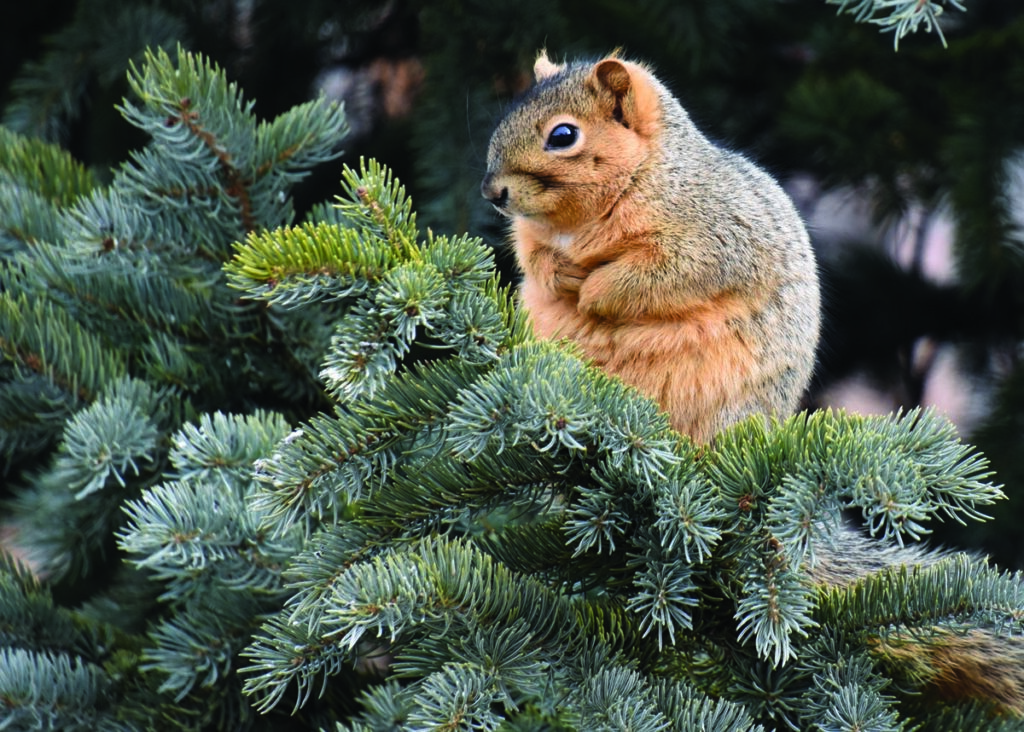
That being said, I’m not counting on spring bird migrations happening as they so often have in the past. So, not knowing which feathered friend to focus on, I’ve decided not to talk about birds at all. Instead, I’d like to introduce you to our four-legged, furry-tailed, tree-climbing backyard rascals: the fox squirrel. Along the Front Range, you can hardly go anywhere without spotting these gymnasts of the tree world.
Fox squirrels are not native to Colorado. They were brought here in the late 1800s and early 1900s by none other than—drum roll—humans. Transported from eastern and Midwestern states as a comfort creature and reminder of home, they arrived alongside many nonnative trees and vegetation, which made them feel right at home. And they did. With two litters each year, their population grew quickly. They took a particular liking to urban and suburban areas, where water, trees, and reliable food sources were plentiful.
Fox squirrels have impressive ways of communicating. You’ll often see one perched on a tree branch, chattering away at whatever has caught its attention. If danger is perceived, the chatter increases in volume and intensity. Otherwise, they simply seem to enjoy the conversation. They also communicate with their tails—almost like their own form of Morse code. Depending on the situation, a tail may wag in different rhythms to send a message. A rapid wag can signal a nearby threat; a slower, erratic wag might mean they’re irritated that I’m being too slow with the peanuts.
The word “squirrel” comes from the ancient Greek word skiouros—skio meaning shadow and oura meaning tail. The tail is an essential part of a squirrel’s anatomy. Beyond communication, it acts as a balancing bar, an umbrella in inclement weather, a blanket in the cold, and even a parachute to slow a descent from a high leap. It’s amazing how far these little creatures can jump. Occasionally they misjudge a landing, flaring their tails to soften the impact—but they are incredible athletes. I have a platform feeder 10 feet from the house, and they will leap from the roof, 10 feet high, landing perfectly on a space the size of a dinner plate. I’ve never seen one miss.
A fox squirrel’s four front teeth never stop growing, which means they must constantly gnaw to keep them worn down. So when you think they’re pruning your trees for fun, they’re actually doing it out of necessity.
They are omnivores, though they prefer seeds, nuts, and fruit. They’ve also been known to eat small insects and bird eggs. Much of their day is spent stashing food. A squirrel can hide up to 25 nuts or mouthfuls of seeds in an hour. Since they don’t always remember where every stash is located, many forgotten seeds grow into plants or trees. In that way, they are four-legged arborists. If they suspect they’re being watched while hiding food, they may even practice deception—pretending to bury something while keeping the prize tucked safely in their mouth.
Fox squirrels can seem to defy gravity, climbing straight up brick walls. They can also descend trees headfirst thanks to the ability to rotate their flexible ankle joints 180 degrees.
My dad had a deep love for squirrels. Coming from a farming background, his affection surprised me, since squirrels can be the bane of gardeners. But in his later years, he would sit on the front porch with little treats for his furry friends. He called them his “furbies.” He named them, and they seemed to know him. Shortly before his passing, in a very serious tone, he asked me to be sure to take care of his furbies. So I do. After years of watching them devour the birdseed meant for my backyard birds, I set up a special feeding station just for them. A 10-foot feeder pole with a cone halfway up keeps them from raiding the bird feeders. I name them, and they know me.
To summarize, fox squirrels are fun, comical, and surprisingly endearing neighbors to have around.
Hope to meet you on the trail. God bless.
You can follow me on Facebook at Bird Friends of Colorado and Birds of Colorado.