

When household budgets are tight and jobs are hard to find, charitable giving may be one of the first budget items to be cut. But the need for help doesn’t disappear when money gets tight. For families experiencing homelessness or domestic violence, financial instability can make an already volatile situation worse.
Now celebrating its 50th anniversary, Wheat Ridge-based nonprofit Family Tree, which served more than 6,500 people last year, operates a network of shelters and programs addressing homelessness, domestic violence and child abuse throughout the Denver metropolitan area.
A Half-Century of Helping Families
Founded in Jefferson County in 1976, Family Tree began by filling gaps in services for people affected by child abuse and domestic violence. Its first domestic violence shelter, Women in Crisis, opened in 1977. The organization expanded into homelessness services in 1989, followed by House of Hope in 2001 and Generational Opportunities to Achieve Long-term Success, or GOALS, in 2019. Its latest housing development, Marshall Street Landing, opened in October 2025. Today, Family Tree serves seven counties across the Denver metropolitan area, with its headquarters at 3805 Marshall St. in Wheat Ridge.
Family Tree offers comprehensive services to address child abuse, domestic violence and homelessness, which is compelling because a person fleeing domestic violence may also lose financial support or stable housing and problems. A family facing eviction may be struggling with unemployment, medical expenses or other circumstances affecting children. There is a veritable rubik’s cube of specific circumstances that led to each individual and family’s unique situation and Family Tree’s programs are designed to be tailored to those overlapping needs and to connect clients with services beyond the immediate crisis. Multiple shelters and programs function as parts of one organization and this approach allows clients to enter through current programs of need and receive referrals to additional services as suits their situation. The goal is to mitigate immediate challenges while focusing on long-term stability.
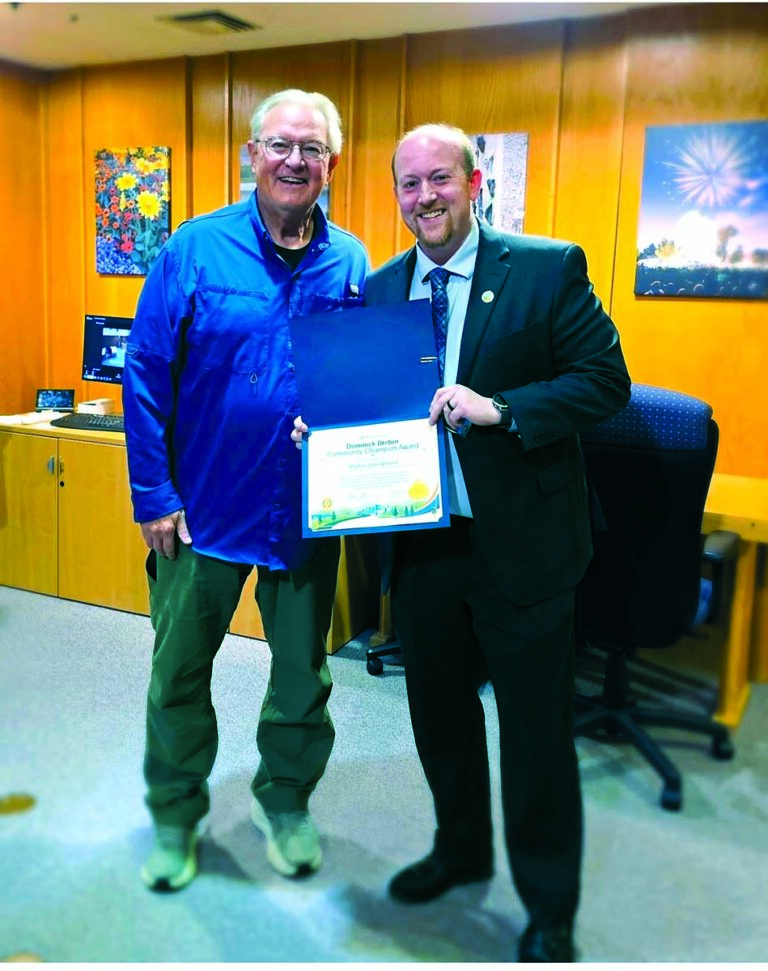
Family Tree’s anniversary follows a period of expansion and recognition, including accolades from the Greater Arvada Chamber, which named Family Tree its 2025 Nonprofit of the Year, recognizing the organization’s community work during its 50th anniversary year.
The Branches of Family Tree
Roots of Courage, formerly Women in Crisis, provides emergency shelter at a confidential location as a refuge for people fleeing domestic violence and their children. Residents receive safety planning, advocacy, case management and access to supportive services. Family Tree also provides domestic violence services outside its shelter, including legal advocacy, assistance navigating protection orders and other legal issues as well as support groups
House of Hope in Englewood offers emergency residential shelter for up to 90 days for families experiencing homelessness. Families receive case management and help navigating housing, employment, education, job training and child care.
GOALS, located in Aurora, takes a longer-term approach. Families can stay four to nine months while working toward financial independence and stable housing, followed by a year of additional support. The program uses a two-generation model that simultaneously addresses needs of parents and children. Adults receive employment and educational assistance, while services for children focus on development, education and well-being.
Marshall Street Landing is an 85-unit development that provides permanent supportive housing for qualifying individuals and families who have experienced chronic homelessness. Unlike emergency shelters, permanent supportive housing has no predetermined maximum stay. Residents receive access to on-site staff and support intended to help them remain housed. As of 2026 the development is at full occupancy.
Family Tree’s additional services, beyond housing navigation, rental and utility assistance, extend to SafeCare, which provides home-based coaching in parenting, child health and household safety. Together, the programs allow Family Tree to address different stages of a crisis while respecting that not every family needs the same solution.
The Need Behind the Numbers
The financial circumstances of those seeking assistance are particularly striking. At intake, 87% of client households reported annual incomes below $20,000. Nearly three-quarters were headed by single female caregivers.
The number of people receiving direct services has grown in recent years. Family Tree reported serving 4,715 people in fiscal 2022-23, compared with 6,528 in fiscal 2025-26, an increase of approximately 38%. However, the increase in people served does not necessarily reflect a similar increase in demand.
Of the 6,528 people served in fiscal 2025-26, 2,878 were children and youths, according to published statistics. Of those children, 61% were younger than 11. The organization also recorded 12,426 crisis and helpline responses and provided 42,898 nights of shelter.
During the same fiscal year, 78% of participants exiting its homelessness program moved into safe and stable housing. At GOALS, 66% of exiting families achieved that outcome. At House of Hope, 75% of exiting families increased or maintained their income. Among surveyed domestic violence survivors, 83% reported knowing more ways to plan for their safety.
Behind those figures are case managers, housing specialists, advocates, other employees and volunteers working with families facing circumstances that rarely have simple solutions.
Many Ways to Make a Difference
Family Tree relies on public funding, private donations, foundations and community partnerships to support its programs.
For residents who want to contribute even when financial donations are out of reach, Family Tree offers a variety of opportunities to give back. Volunteers can contribute according to their strengths, including preparing meals, helping with yardwork or lending professional expertise, without writing a check. Some positions may even lend experience that is helpful for those navigating a job search or career change including training and networking to make professional connections.
Opportunities to contribute include:
Professional services: Marketing and communications volunteers can assist with social media campaigns, content development, analytics and newsletters. Administrative volunteers help answer phones, maintain records, organize information and connect community members with resources. Licensed attorneys can provide pro bono legal assistance to domestic violence survivors navigating the legal system.
Administrative support: Administrative volunteers help answer phones, maintain records, organize information and connect community members with resources.
Meal preparation: Groups of two to six people can prepare meals for residents at House of Hope, GOALS or Roots of Courage. House of Hope has opportunities to prepare dinner for as many as 40 people.
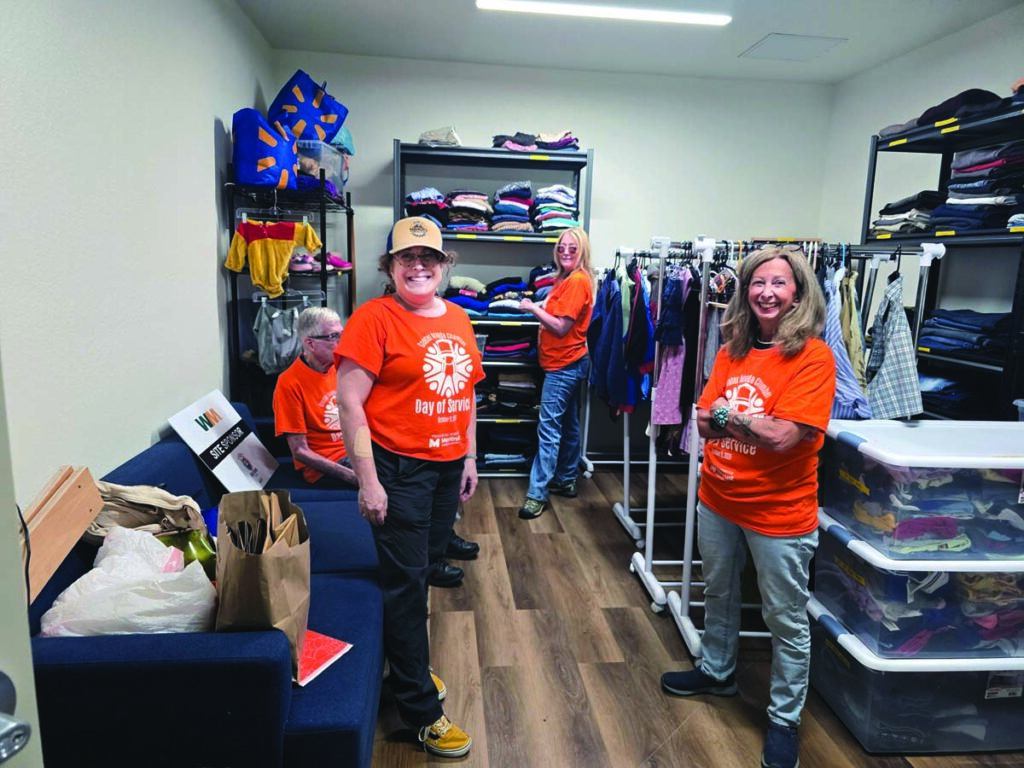
Facility maintenance: Volunteers can also organize donation closets, maintain landscaping, wash windows or help and improve living spaces. At Family Tree’s Wheat Ridge headquarters, projects include trimming bushes, planting drought-resistant flowers and maintaining outdoor areas.
Group projects: Through Project IMPACT, businesses, civic groups, faith organizations and other community members can coordinate projects ranging from a couple of hours to a full day.
In-kind donations: Family Tree accepts new, unopened household items, toiletries, bedding, shelf-stable food and grocery gift cards. Donations must be arranged in advance.
Other opportunities: Family Tree also encourages prospective volunteers to suggest skills that may not fit an existing opportunity.
After 50 years, Family Tree’s work remains rooted in community involvement. Family Tree also encourages prospective volunteers to suggest skills that may not fit an existing opportunity. Volunteers can organize donation closets, maintain landscaping, wash windows or help improve living spaces. Not every opportunity requires specialized skills.
Family Tree is headquartered at 3805 Marshall St. in Wheat Ridge. Residents interested in volunteering can contact Director of Volunteer Engagement Rebekah Hawthorne at [email protected] or 303-403-5892. For donations, contact [email protected] or 303-403-5891. More information is available at thefamilytree.org.