


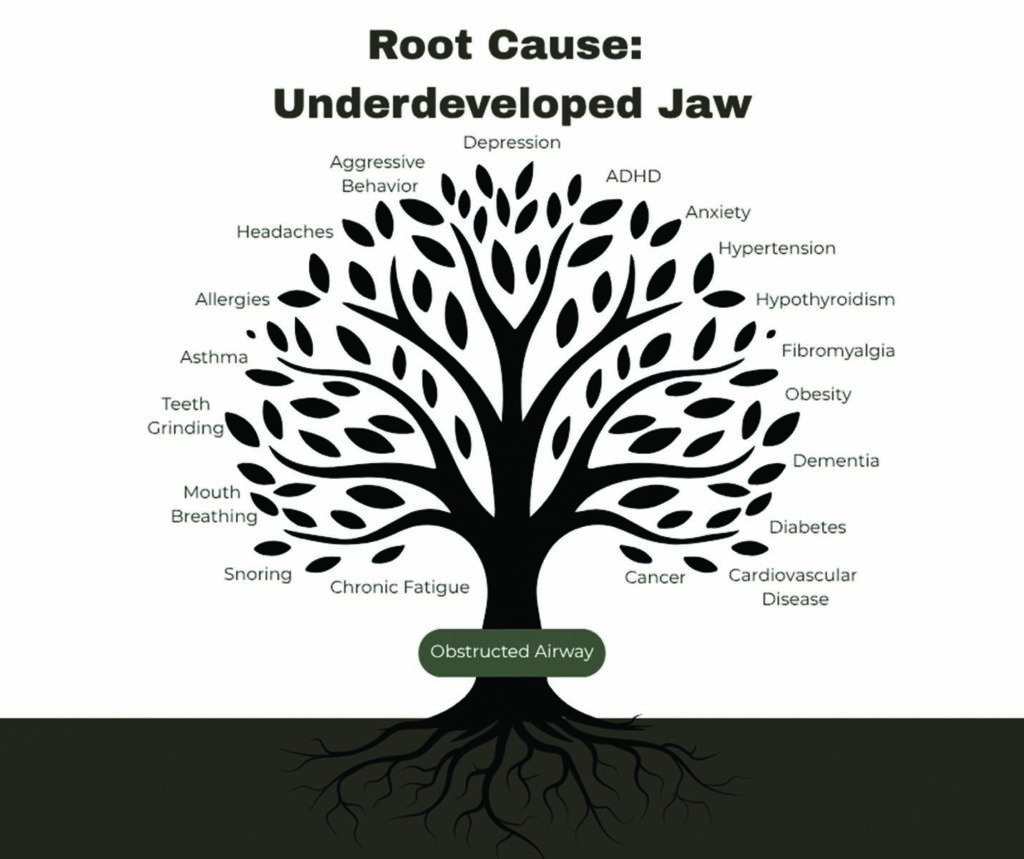
When people think about their health, breathing—especially during sleep—is rarely top of mind. Yet the airway plays a foundational role in how the body functions. When it’s compromised, the effects often show up in subtle, everyday ways that are easy to overlook or misattribute.
Airway dysfunction occurs when airflow through the nose or throat is restricted, particularly at night. It can range from mild resistance to more significant sleep-disordered breathing. What makes it challenging is that the signs are not always obvious, and many people live with symptoms for years without recognizing the root cause.
One of the most common indicators is persistent fatigue, even after a full night’s sleep. When breathing is disrupted, the body may struggle to reach deeper, restorative sleep stages. The result can be daytime drowsiness, brain fog, poor concentration, and even mood changes such as irritability or anxiety.
Mouth breathing is another frequent sign. Breathing through the mouth instead of the nose can dry oral tissues, increase the risk of cavities and gum disease, and signal an underlying airway issue. It often goes hand in hand with snoring, restless sleep, or frequent waking—symptoms many people don’t realize are connected.
Physical signs may also appear. Teeth grinding or clenching (bruxism), for example, is often the body’s attempt to reopen the airway during sleep. Over time, this can lead to worn teeth, jaw discomfort, headaches, and TMJ-related issues.
In children, airway dysfunction can present differently. Symptoms may include bedwetting, dark circles under the eyes, hyperactivity, difficulty focusing, or crowded teeth and narrow dental arches. These signs are often overlooked but can be closely tied to breathing patterns and airway development.
The impact of poor airway function extends far beyond feeling tired. Disrupted breathing during sleep can affect oxygen levels, stress the nervous system, and contribute to inflammation. Over time, this may impact immune health and the body’s ability to heal and recover.
The encouraging news is that airway dysfunction can often be identified and improved—especially when addressed early. A comprehensive approach focuses on uncovering the root cause and supporting long-term health.
Treatment may include myofunctional therapy, which retrains the muscles of the tongue, lips, and face to promote proper breathing and oral posture. In some cases, procedures to address restricted oral tissues, such as tongue-ties or lip-ties, can improve function. For growing patients—and select adults—orthopedic expansion may be used to widen the upper jaw, creating more space for both teeth and the airway.
Collaboration with specialists, like airway dentists, dediatricians, cranial osteopaths, ENT providers and sleep physicians, may also be part of a well-rounded care plan. In more advanced cases, oral appliances or surgical options may be considered.
Ultimately, awareness is key. Many symptoms associated with airway dysfunction are common—but they are not normal. Recognizing the signs early can lead to better sleep, improved energy, and lasting health benefits.