


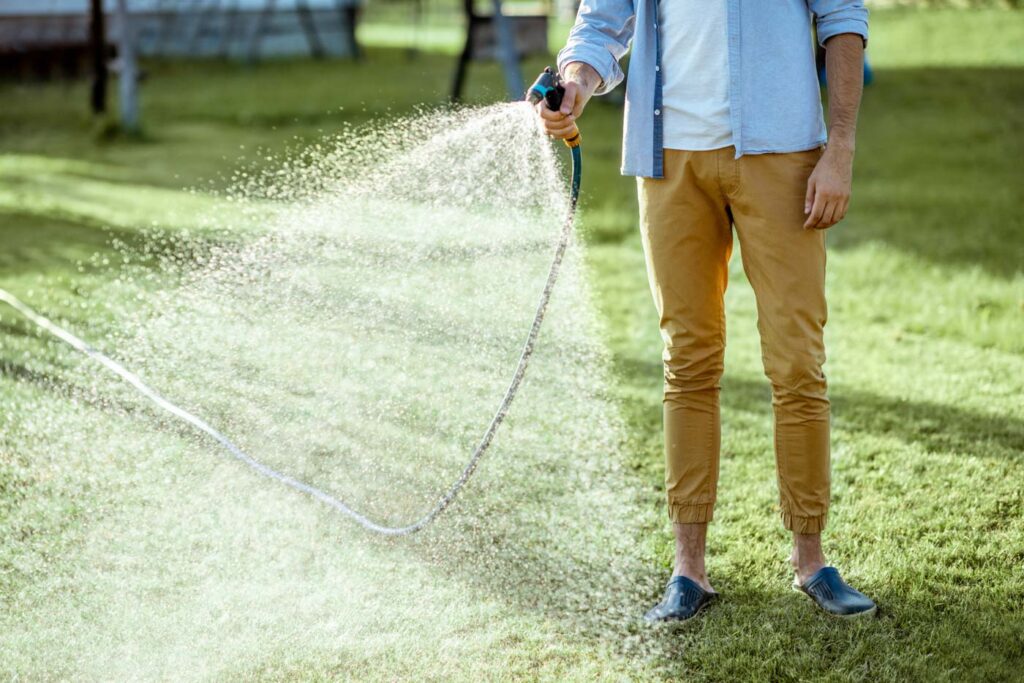
As Colorado endures this dry summer, most Front Range communities have once again limited the days residents can water their lawns. The goal is simple: conserve water and protect our reservoirs.
But here’s a question worth asking: Can some watering restrictions actually encourage people to use more water? I have been asking my friends; “when does Thursday before 10am actually start?
It sounds backwards, but researchers have found that human behavior doesn’t always follow common sense.
Several Colorado studies have shown that watering restrictions reduce overall water consumption. During Fort Collins’ 1977 drought, restrictions cut municipal water use by nearly 20 percent. Similar studies during the Front Range drought of 2002 found most communities achieved meaningful savings, although results varied depending on how the restrictions were designed.
The interesting part comes when researchers look at homeowner behavior.
A National Bureau of Economic Research study found that assigning residents only certain days to irrigate can create what economists call a “rigidity penalty.” Instead of watering only what their lawns need, many homeowners compensate by running sprinklers longer on their allowed days. Rather than giving the grass a light drink every few days, they soak it all at once.
The result? Some households actually used more water than homeowners who were allowed greater flexibility.
It’s easy to understand why. Nobody wants to watch thousands of dollars’ worth of landscaping turn brown. If today is your only watering day, there’s a temptation to make every minute count.
Water districts aren’t blind to this behavior. That’s why many now emphasize watering smarter rather than simply watering less. Watering before sunrise, repairing broken sprinkler heads, preventing runoff onto sidewalks, and adjusting sprinkler timers after rain can save far more water than simply limiting which days irrigation is allowed.
Technology is helping, too. Weather-based irrigation controllers automatically skip watering after rainfall or during cooler weather, reducing waste without forcing homeowners into rigid schedules.
This isn’t an argument against conservation. Colorado’s water future depends on using every drop wisely. Outdoor irrigation still accounts for the largest portion of residential summer water use, making conservation essential. It’s also important to remember that 80% of Colorado’s water usage is done by farmers using antiquated technics and technology. But good policy also needs to account for human nature.
Sometimes people respond to rules in unexpected ways. A restriction that looks effective on paper may produce different results in the real world if homeowners simply compensate by watering longer when they finally get the chance. Thursday before 10AM actually begins at 12:01AM.
Perhaps the lesson isn’t that watering restrictions are wrong. Instead, the best conservation programs may combine reasonable limits with education, smart technology, and pricing incentives that reward efficient water use rather than focusing only on the calendar.
After all, the objective isn’t simply watering less often. It’s using less water.
I reached out to Consolidated Mutual (one of 5 water districts in Wheat Ridge to ask them if the restrictions were helping or have they been observing much of the same. Here is what Jarod Roberts-Vice President – Chief of Water Resources Consolidated Mutual had to say:
“Thanks for reaching out.
To be direct: we are falling short of our total reduction goals during this historic drought. And yes, there are people who are using a loophole strategy of not reducing total consumptioBy maximizing every technical minute of their 2-day allowance period.
Using every allowable minute of permitted hours to max out irrigation is a shortsighted loophole strategy. It directly undermines the intent of our restrictions and works against the spirit of managing a shared community resource.
It’s like a football team, say the 2022 Denver Broncos, burning all three of their timeouts in the third quarter of a game at Mile High Stadium. Sure, the rules technically allow you to call those timeouts whenever you want, but blowing through your safety cushion early leaves you completely helpless in the fourth quarter when the thin air catches up to you. It is just simply not a wise strategy.
Prohibiting watering between 10:00 AM and 6:00 PM stops heat evaporation, but it doesn’t solve our deficit if total volume doesn’t drop. Outdoor watering is our largest draw, and we must hit our 25% overall reduction goal.
Because we cannot predict how long drought conditions will persist, conserving water now is our team’s defensive game plan. Responsible efficiency today is the only way to protect our shared supply and prevent guaranteed, harsher restrictions down the field.
Feel free to reach out if you need additional context.”
Roberts also added that consumers simply didn’t believe the severity of the situation, “this is no joke, how do we get people to listen?” I promised that we would keep the topic and concern highlighted. What measures has your household adopted? Please share and send to [email protected].