

Should we start tackle football this year? What about his weight? I’m worried he’s not eating enough and too focused on protein. Are we letting them have too much screen time?”
Parenting can feel like a long line of questions and worries—wasn’t I supposed to get a handbook for this? Today, kids are growing up in a world that feels chaotic and unfamiliar to many parents, me included. As a parent who first encountered the internet through AOL dial-up, today’s online environment can sometimes feel like a cesspit of rage and targeted marketing. It has its bright spots too, helping us find community and connection. For parents, that mix of connection and constant information can make health decisions feel overwhelming. Figuring out what’s true online can feel like a full-time job on top of raising kids.
That tension between connection and uncertainty has felt more fraught in recent weeks, especially when it comes to what once felt like basic health information. At the same time that flu and measles cases remain high across the country, the federal government has made abrupt changes to the CDC’s childhood immunization schedule. For the first time , guidance from pediatric experts and federal health leaders doesn’t fully align, leaving parents understandably confused about who to turn to and what to trust. And the stakes are high. Just recently, Colorado reported the second child death related to flu this season. Any loss of a child is devastating and gives many parents pause. These aren’t abstract debates, there are real impacts.
“Wait, kids can die from getting the flu?” I suspect my youngest had come across the headline about the recent child death when he asked us this. Between school activities, work and an insurance change, we were late getting his flu shot this year—something he’s now understandably anxious about. We are too.
Wanting to protect our kids is something nearly all parents agree on, even when we’re unsure about how to do it. Parents deserve accurate, science-based information we can feel confident about when it comes to protecting our kids. Over the last year, ideas that once lived on the fringes of the internet have moved into the mainstream and even into federal health policy. Messages that provoke fear around everyday health decisions continue to intensify, making it harder for parents to know what is credible and what isn’t.
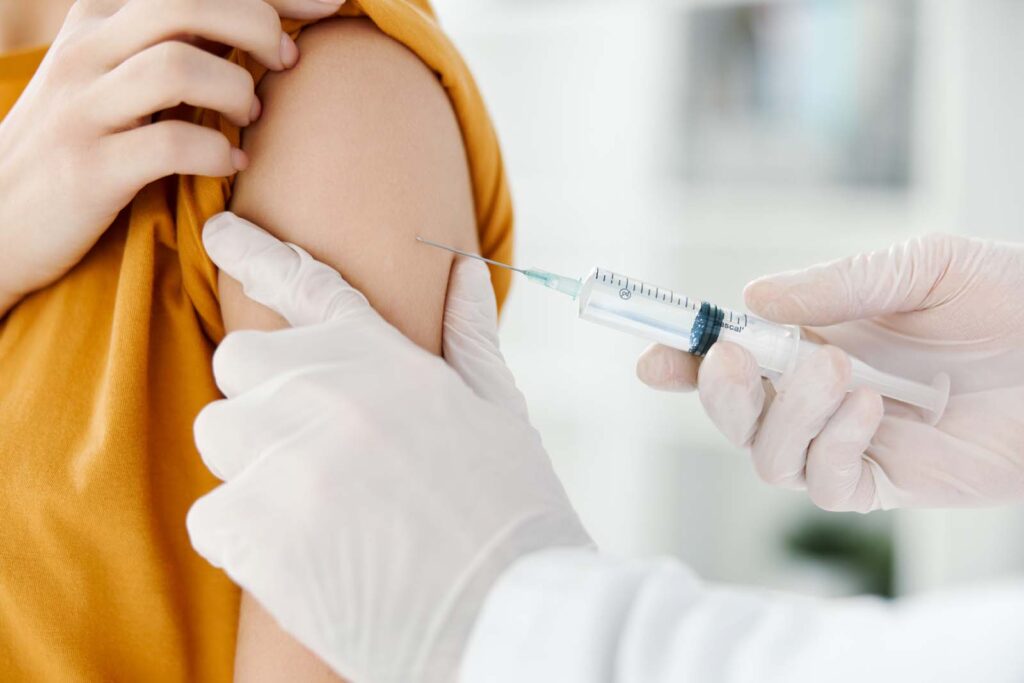
Vaccines, one of the most effective tools we have to prevent serious illness, have become a stressful decision for many parents in recent years. Conflicting messages are everywhere, and social media rewards fear far more than reassurance.
When we were talking about recent measles outbreaks, my great-aunt, now in her 80s, told me: “I had both measles and German measles [rubella] as a kid. It was awful. When the vaccines came out, our parents waited for hours in lines around the block to get it for us.” In many ways, vaccines have become a victim of their own success. It’s grown easier for doubt and misinformation to take root when most of us have never seen the diseases vaccines protect us from.
And yet vaccines continue to do exactly what they were designed to do: reduce risk, prevent severe disease and protect those who are most vulnerable. They protect children whose immune systems are still developing, and they help shield babies, elders and others who cannot always protect themselves. Their greatest success is often invisible—nothing happens.
When it comes to health, talking with a trusted healthcare provider who knows you and knows your child can make a world of difference in cutting through the noise. They want what’s best for our kids the same way we do. They’re in it with us on doing whatever we can to keep our kids healthy and thriving in a complex world.
With so much fear being pushed at parents, it’s normal to have questions. You’re not alone, we’re all sorting through the same noise as we try to do the best we can for our kids. As parents, we don’t ever get certainty. That’s not part of the deal and no single decision can eliminate every risk. But we deserve support and unbiased information to make the best choices we can, especially when it comes to one of the best tools we have to keep our kids safe.