

Happy January my nature loving friends. January and February are tough months for many, as it used to be for me. But since being handed a camera and a warm coat I have come to realize it’s a very magical time to be outdoors. We are lucky to live in Colorado where seasonal changes are the norm. Media labels our January weather as stock show weather, meaning bitter cold. If you’ve lived here long enough you know January can be a blizzard, freezing cold, blue sky, and even early feelings of spring teasers.
Being labeled “the bird nut” my interests in January are most heavily weighted towards the birds that choose to tough it out in our mixed up winter weather. In an attempt to stay on task writing of birds commonly seen in our parks and greenbelts I am going to introduce a bird that spends more months in the Pacific Northwest and southern Canada than it does in Colorado. But that’s okay, we get them for four to five months of the year. I’m speaking of the Hooded Merganser. Extremely common and easy to find. In November when they leave their nesting grounds to head south, many head for Colorado.
We have three varieties of Mergansers visit over the winter. The Common Merganser, the Red Breasted Merganser, and the Hooded Merganser. Common Mergansers being the only of the three to nest here. The other two spend the winter filling up on small fish, or Colorado lobster, aka crawdads. When they are not hunting they will be in search of a mate. The mate selection will take most of the winter prior to their departure in April. If I had to choose my favorite bird to view it would be the Hooded Merganser. If birds can have OCD, it would be these little ones.
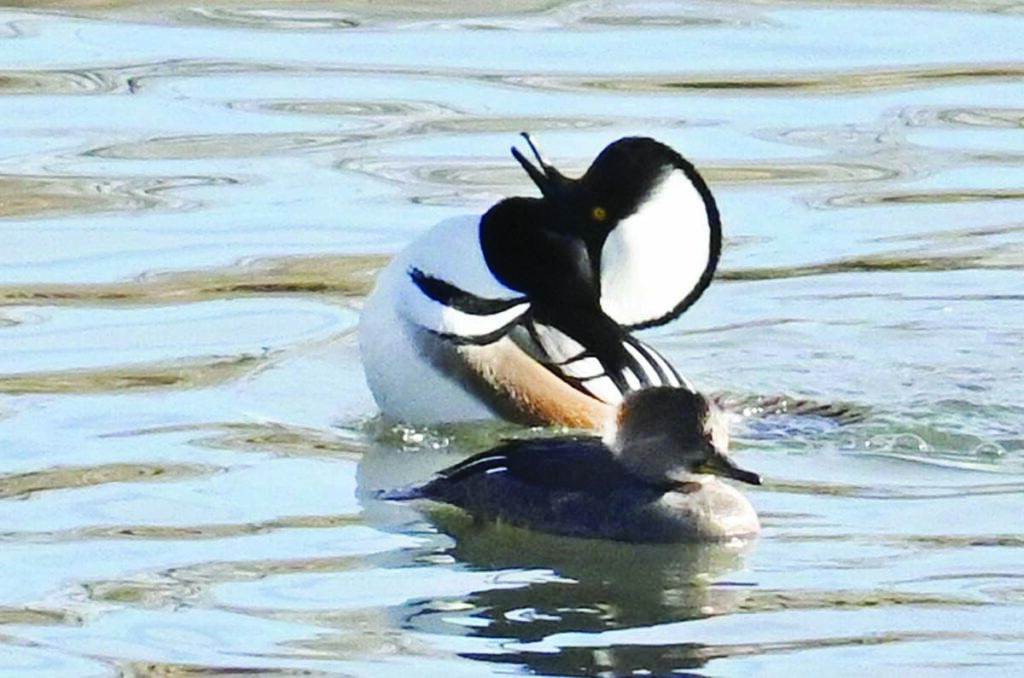
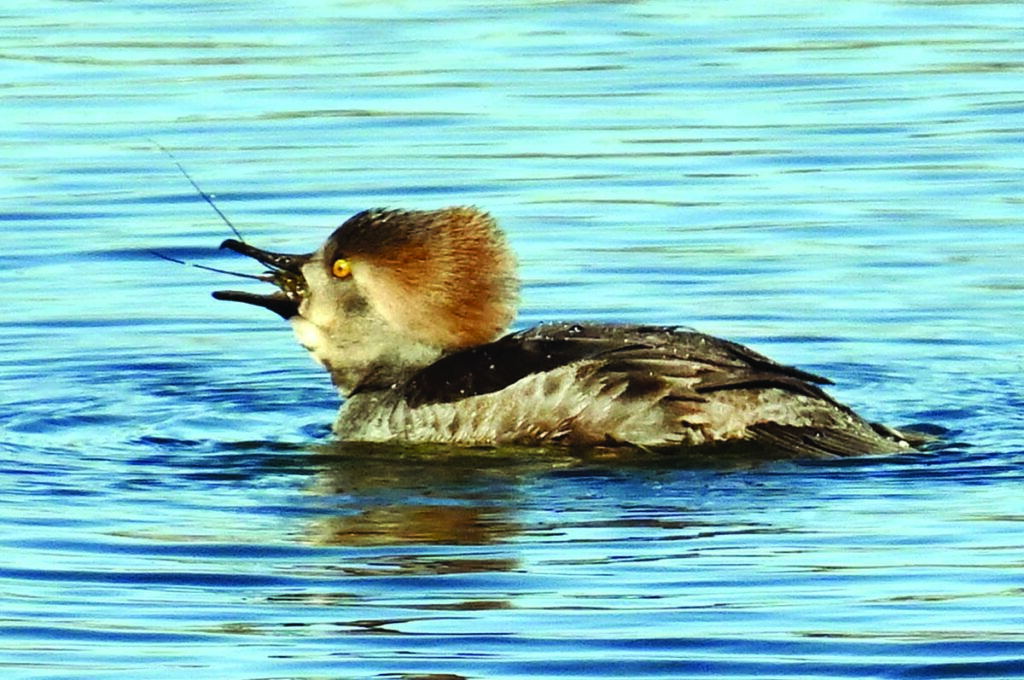
Hooded Mergansers are grouped in with ducks, but they are unique to all other ducks. Biggest determining factor is they are fish eaters. Fish, and crustaceans make up the majority of their diet. Our local lakes are loaded with both. They get their food by diving, having a clear eye covering adapted much like goggles to allow clear site under water. They have long, narrow bills with serrated edges, perfect for gripping prey. They have webbed feet set further back on the body making for powerful fast dives, but a very clumsy awkward waddle when on land, much like me walking in flippers.
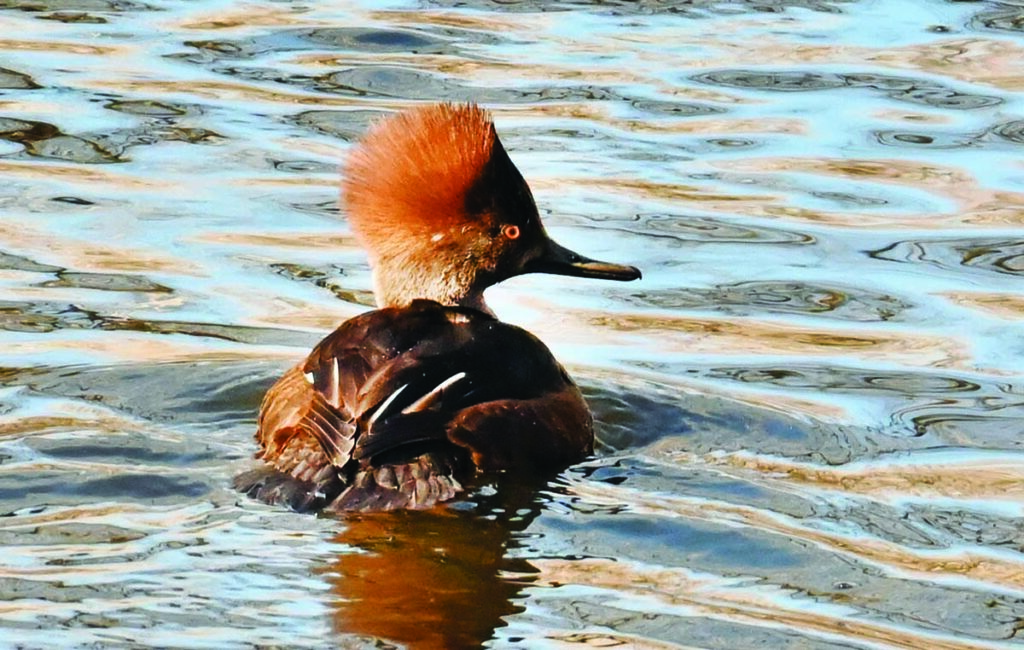
Hooded Mergansers or Hoodies get their name from a truly elaborate head crest. After molting and growing new feathers in the fall their classic hair-do grows in. This is in preparation for the upcoming mate selection. The males will use this crest in elaborate displays trying to “wow” the girls. To watch their antics is both comical, and beautiful at the same time. One female can get five or six males doing their “look at me, I’m sexy” dance. The drake with the most drama typically wins the young ladies’ heart. While partaking in the dance they will call out in what is described as much like that of a frog. Referred to as croaking. Giving them a nickname of “frog duck” in some areas.
Hoodies are cavity nesters, seeking out abandoned nests of woodpeckers or wood ducks. Since Hoodies are the smallest ducks in North America there are more nesting holes available. The female will take on the duties of hatching and rearing the young. Between 10 and 13 eggs will be laid. Even at times depositing eggs in another’s nest for hatching. Females are known to babysit others nests as well. One hen in Washington was seen leading 70 chicks across a pond. Shortly after mating the male heads for the nearest crab fest, never seeing his children. Much like wood ducks the hatchlings will dive from the nest up to 50’. When all have exited the nest the hen walks them to nearby water. They are not fed by the hen. Their first feeding is on shallow vegetation and bugs along the shoreline.
They have another interesting instinct as well. When danger is present they can flatten themselves low on the water appearing as a log. Chicks not yet having that ability will close ranks tight in against each other giving the appearance of a larger log. An avian version of “act natural”.
There is so much more I could write of these little ones, but I’d rather you get to see them for yourselves. The west end of the pond below the new Lutheran Hospital, or Prospect Lake are outstanding places to meet these little ones. If I happen to be there please say “hi”. Look for an old yellow Dodge pickup. If it’s there, so am I. Be glad to show you around. Bring a camera.
Wishing you many blessings in 2026. Happy Trails.
Follow me on FB Birds of Colorado, or Bird Friends of Colorado.