


The arrival of fall (finally!) got me to musing about what life was like for pioneers when diet and nutrition became a concern and starvation loomed. Colorado’s climate is great for raising all kinds of food crops, but what if the crops fail? What if hail pulverizes gardens and crops? What if grasshoppers eat everything in sight? What happens to families, especially children, when semi-starvation lasts months?
Diversification was the key. Families relied on a combination of raising crops, gardening, foraging and hunting to stay healthy. Failure of even one of those methods could be devastating, leading to months of dietary monotony and potential long-term health conditions.
It was a full-time job that required the whole family.
By the 1870s farmers around here were raising potatoes, peas, cabbage, and wonderfully versatile apples. Cultivated garden produce and field crops were supplemented by wild berries and edible plants, usually collected by children who knew to look for currants, gooseberries, raspberries, blackberries and wild asparagus.
So, if dad was in the field or forest and the kids were out picking berries, what did the woman do? Preservation was the name of the game. After preparing the meals, doing the laundry and tending the children and the stock, women were often charged with carrying out decisions concerning what part of a bountiful harvest went where. Again, diversity was the key.
Durable crops like cabbage, potatoes, carrots, beets and turnips were relegated to the cool, dark root cellar, but first they had to be sorted for quality. Old or blemished meant “eat soon”. Only ripe, solid specimens went into long-term storage.
Fruit, whether orchard grown or foraged, was more delicate and not an option for the cellar, at least when they were fresh. That’s where drying came in, an excellent option in Colorado’s climate. Fruit was sliced or halved and laid out on large rocks to employ heat and sun to dry rapidly, or dried inside using the cook stove. Some fruits could be reconstituted in hot water; others were made into fruit “leather”.
Pickling with salt, vinegar and spices was popular and practical for cucumbers or making sauerkraut out of cabbage. Conversely, preserving fruits and some veggies with sugar (when it was available) to make jams, jellies and fruit butters was yummy.
Apples were the true stars of the produce world, though, because of their versatility. They could be stored fresh (for a while), dried, cooked into sauces or sweetly preserved. That’s the reason they became the go-to orchard item in the Clear Creek Valley, so valuable that one area farmer carted trees by wagon from the mid-west to plant an orchard.
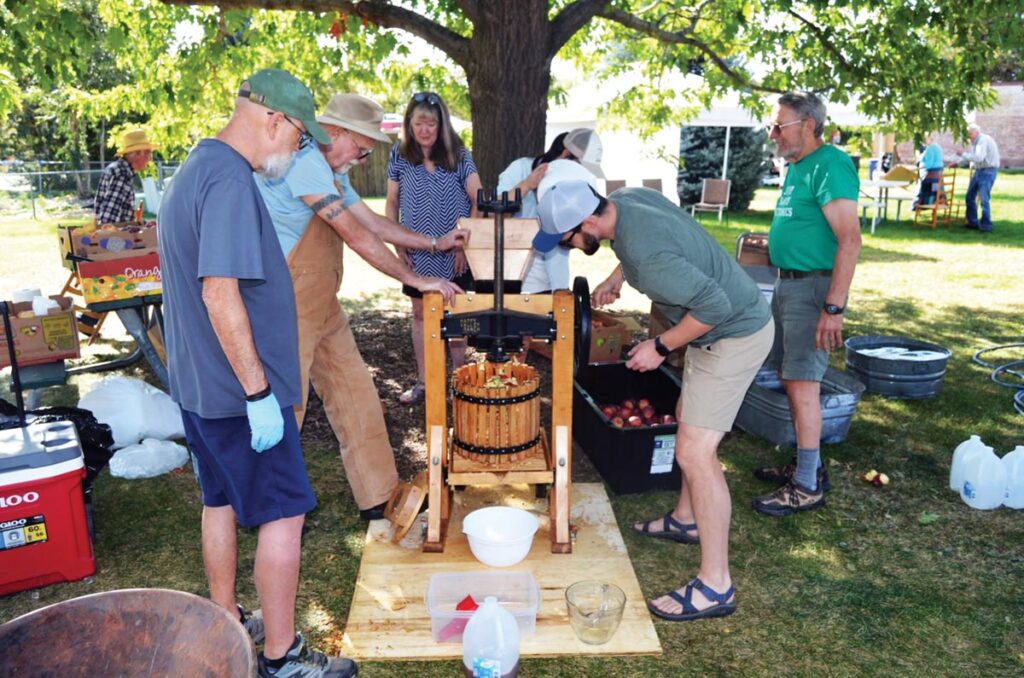
So, join the Wheat Ridge Historical Society in the celebration of “All Things Apple” at this year’s Apple Cider Festival on Saturday, October 10 from 10:00 to 2:00 at the Historical Park (4610 Robb St.) Bring a bushel of apples and a clean container, and for a $5 donation, you can process your apples using our presses and take home sweet cider to enjoy. Plan time to enjoy other festival activities like puppet-making and games for the kids, peeling and saucing demonstrations (with free samples!), live music and Mile High BBQ sandwiches.
See you there!